A Wyckoff Consulting Thought Paper
You built a successful company without a marketing department.
Think about that for a moment.
No Chief Marketing Officer.
No sophisticated demand-generation strategy.
No formal marketing team.
Maybe not even a marketing budget anyone could clearly define.
And yet - you grew.
You built relationships. Your reputation spread. Customers referred other customers. Salespeople knocked on doors, picked up phones, attended trade shows, worked their networks, and closed business.
Maybe you, as the owner, were the company’s best salesperson.
And it worked.
So when someone tells you that you “need marketing,” your reaction is understandable:
Why?
We’ve made it this far without it.
That’s a fair question.
For many established companies generating $3 million to $50 million in revenue, the question isn’t whether marketing was necessary to build the company.
Clearly, it wasn’t.
The question is:
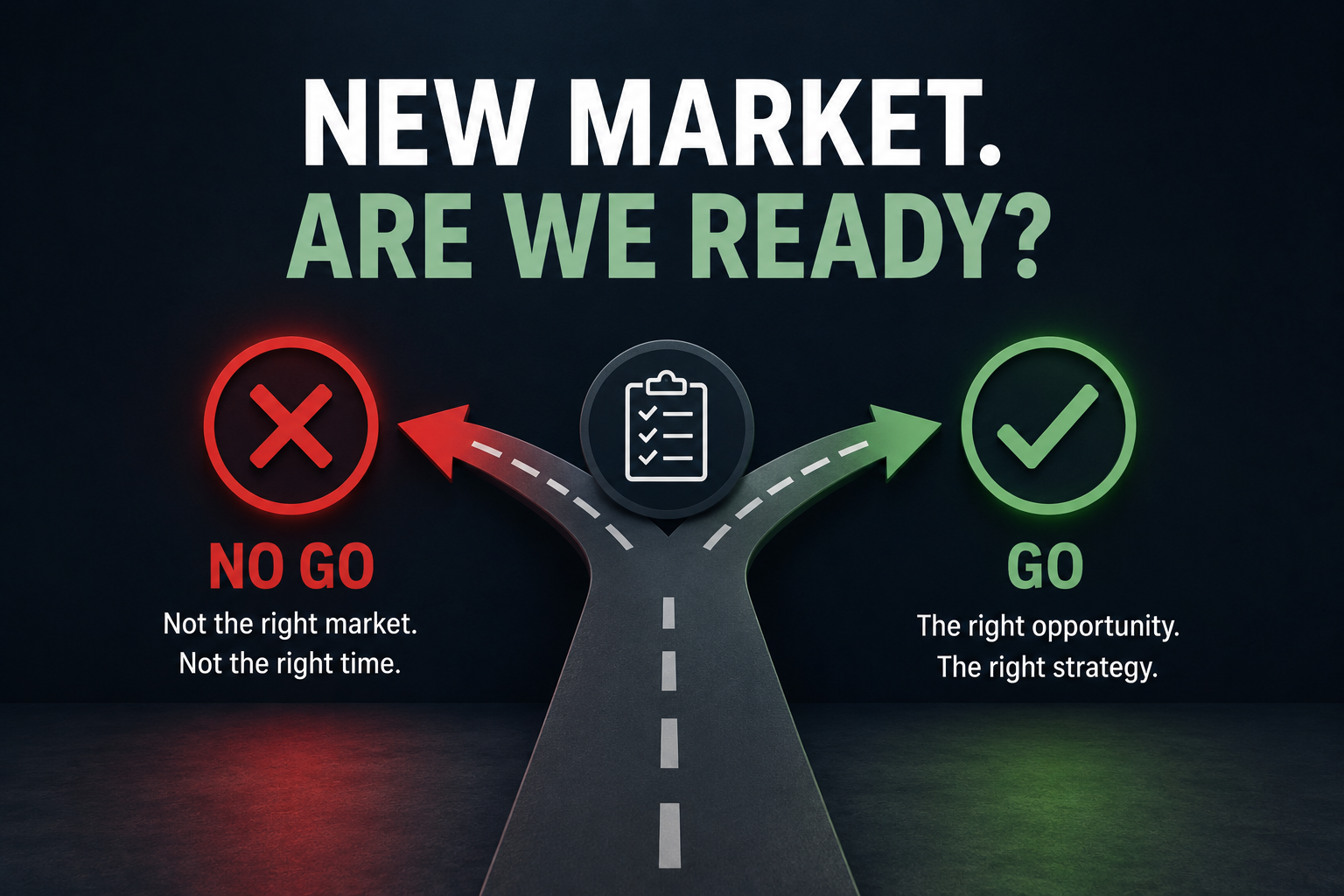
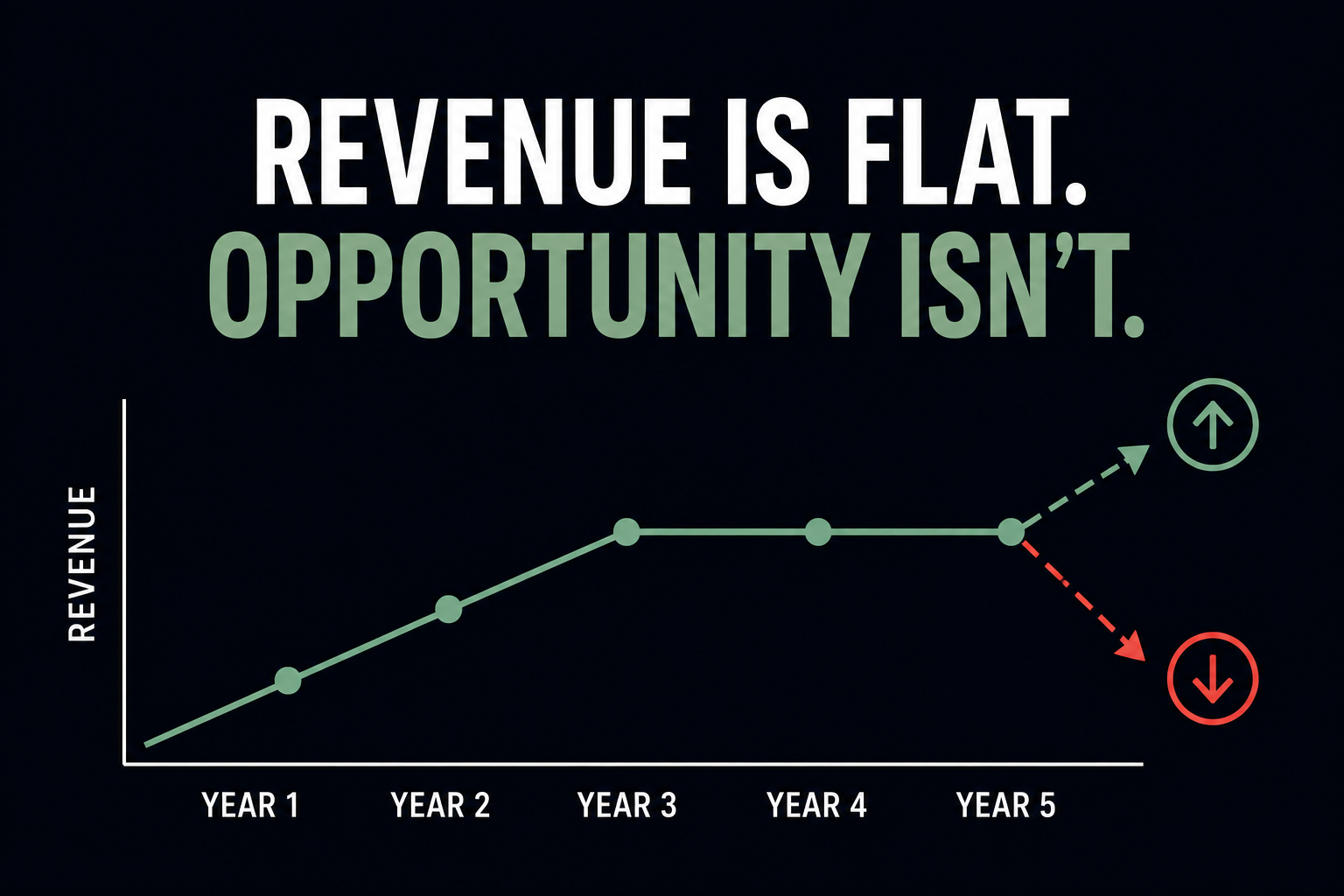
Can the growth model that built your company take it where you want to go next?
That’s a very different question.
Here are five signs that the answer may be no.
1. Growth Still Depends on the Owner
This is one of the first things I look for.
If the owner stopped selling tomorrow, what would happen?
Would new opportunities continue entering the pipeline?
Would important relationships remain strong?
Would prospects understand what differentiates the company?
Could the sales team create demand without the founder opening doors?
In many successful privately held companies, the owner is the marketing strategy.
Their reputation creates credibility.
Their relationships create opportunities.
Their network generates referrals.
Their personality helps close business.
That’s incredibly powerful.
It’s also difficult to scale.
Eventually, the company’s ability to grow becomes constrained by the owner’s time.
If growth depends on you, you don’t yet have a growth engine. You have a very successful person.
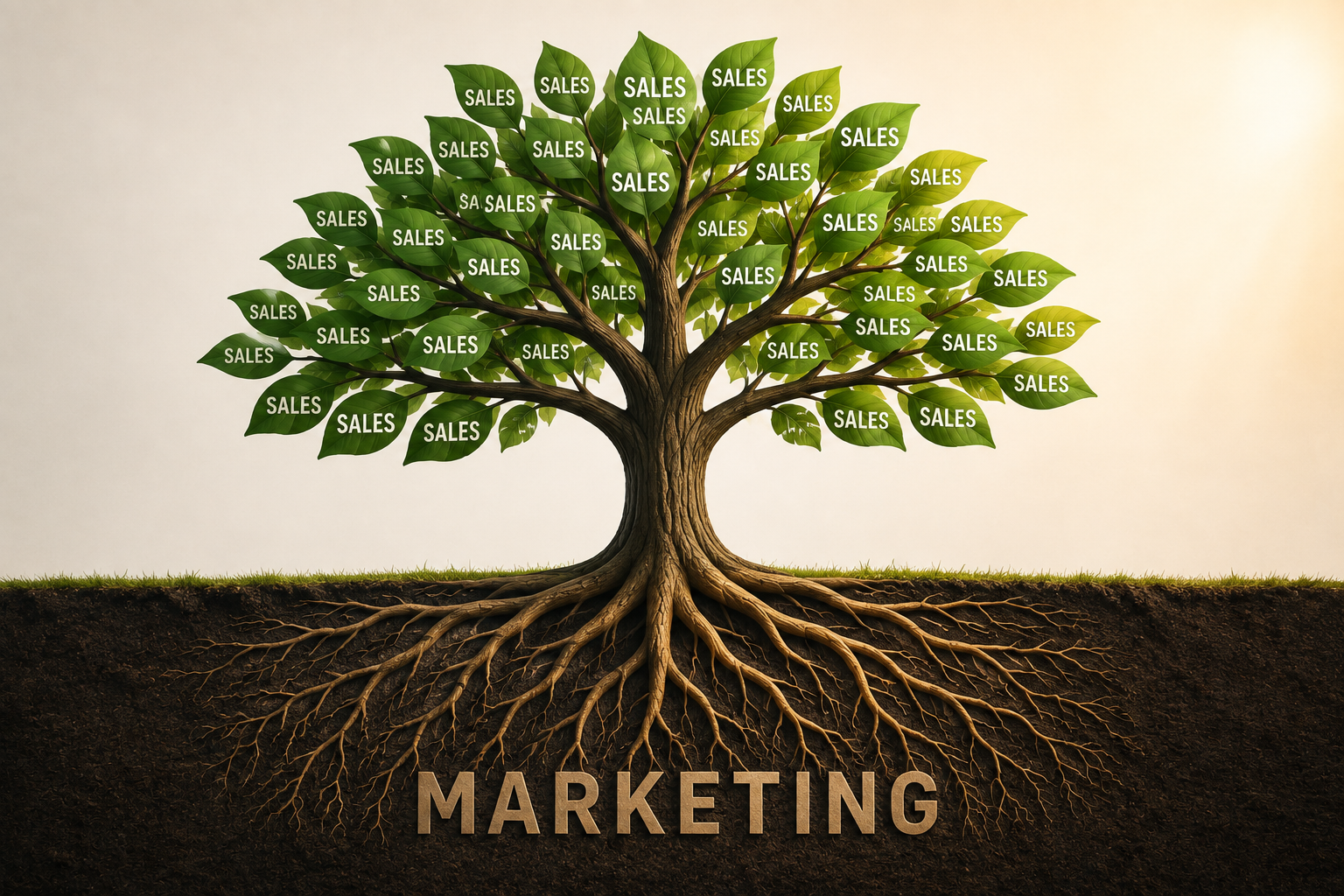
Marketing begins converting what exists in the owner’s head, reputation, and relationships into something the entire organization can leverage.
2. Salespeople Are Responsible for Creating Their Own Demand
Ask your sales team a simple question:
Where does your next opportunity come from?
If the answer is:
“My network.”
“Cold calling.”
“Referrals.”
“Trade shows.”
“Existing customers.”
“I find my own leads.”
Then you may have a sales organization - but not yet a true sales and marketing organization.
Good salespeople should absolutely prospect.
But imagine what happens when they aren’t starting every conversation from zero.
The prospect has already heard of your company.
They’ve read something valuable from you.
They understand your capabilities.
They’ve seen your work.
They know why you’re different.
They’ve encountered your leadership online.
They already trust your expertise.
Now your salesperson isn’t creating awareness from scratch.
They’re entering a conversation that marketing has already started.
Marketing shouldn’t replace sales. It should make sales more effective.
3. Referrals Are Your Best Lead Source - and That’s Also the Problem
I love referrals.
They typically arrive with trust already established and often convert at very high rates.
But there’s one significant problem:
You can’t control when the phone rings.
A referral-based company can be highly profitable and still have an unpredictable pipeline.
That’s fine until leadership wants to accelerate growth.
You can’t tell your referral network:
“We need 30% more opportunities next quarter.”
That’s where a marketing function begins to matter.
Marketing gives the company the ability to create demand intentionally rather than simply wait for demand to appear.
The goal isn’t to eliminate referrals.
It’s to build another engine alongside them.
4. The Market Doesn’t Know How Good You Are
This is more common than most CEOs realize.
I’ll meet a company doing extraordinary work.
Fantastic customers.
Excellent people.
Decades of experience.
Incredible technical capabilities.
Outstanding customer retention.
Then I look at how the company presents itself to the market.
The website looks ten years old.
Google doesn’t understand what they do.
LinkedIn is virtually silent.
Their best customer stories have never been documented.
Their expertise exists entirely inside the building.
Their competitors look significantly more sophisticated online - even when they aren’t nearly as capable operationally.
That’s dangerous.
Because prospects don’t initially evaluate the company you actually are.
They evaluate the company they perceive you to be.
And increasingly, that perception is formed before anyone from your sales team knows the prospect exists.
Being great at what you do isn’t enough if the market doesn’t know you’re great at it.
5. You Want the Business to Grow Beyond What Built It
This is the real inflection point.
Maybe you want to go from $10 million to $20 million.
Enter another geography.
Launch another service.
Pursue larger customers.
Reduce customer concentration.
Build recurring revenue.
Prepare for an eventual sale.
Acquire another company.
Or simply create a business that doesn’t depend so heavily on the founder.
At some point, relationships and reputation alone may no longer be enough.
The organization needs to deliberately answer:
Who is our ideal customer?
What markets should we pursue?
How are we different?
What is our value proposition?
Where will future demand come from?
How will we generate it?
What should marketing cost?
How will we measure whether it’s working?
Who owns all of this?
Those aren’t advertising questions.
They’re business strategy questions.
And somebody needs to own them.
So…Do You Actually Need Marketing?
Maybe not.
That’s an answer you probably don’t expect from a marketing consultant.
If you’re satisfied with your current growth rate, your pipeline is strong, customer concentration is low, margins are healthy, sales has all the opportunity it can handle, and you have no significant plans to expand -
don’t build a marketing department just because someone tells you you’re supposed to have one.
Marketing should solve a business problem.
But if leadership is saying:
We want to get to the next level.
Then something has to create that next level of demand.
Hope isn’t a strategy.
Neither are referrals.
And hiring another salesperson doesn’t necessarily solve the problem.
Before adding tactics, technology, agencies, or headcount, leadership needs to determine what kind of marketing capability the business actually requires.
Don’t Start by Hiring a Marketing Person
This may sound strange coming from a Fractional CMO.
But one of the biggest mistakes a company can make is deciding:
We need marketing. Let’s hire someone.
Who?
A Marketing Coordinator?
Digital Marketing Manager?
VP of Marketing?
CMO?
Content person?
Demand-generation specialist?
What are they supposed to accomplish?
What should their budget be?
What should they own?
How should success be measured?
Without a strategy, the first marketing hire often becomes the person responsible for:
The website.
Social media.
Brochures.
Trade shows.
Email.
Promotional items.
And anything else containing the company logo.
The company hasn’t built a marketing function.
It has hired someone to do marketing stuff.
There’s a huge difference.
What a Fractional CMO Brings to the Table
This is where the Fractional CMO model can be especially valuable.
Before building a department, design the function.
An experienced Fractional Chief Marketing Officer can sit alongside the CEO and executive team and determine:
What does growth require?
What role should marketing play?
Who are we trying to reach?
What should we say?
Which capabilities belong internally?
Which should be outsourced?
Who should we hire?
What should we spend?
How will marketing support sales?
How will we measure success?
Then you build the people, processes, technology, partners, and accountability around that strategy.
The Fractional CMO doesn’t have to become another permanent layer of overhead.
In fact, success may eventually mean building the marketing organization that no longer needs us.
Five Questions Every CEO Should Ask
1. If I stopped generating business personally, what would happen to our pipeline?
2. Do our salespeople receive meaningful opportunities from anything other than their own prospecting and relationships?
3. Can we deliberately create more demand when we want to grow faster?
4. Does the market’s perception of our company match how good we actually are?
5. Can our current growth model realistically get us where we want to be three years from now?
If those questions create uncomfortable answers, you may have reached another business inflection point.
You Didn’t Need Marketing to Get Here.
That deserves respect.
You built something successful.
But success creates a new responsibility:
Building the company capable of becoming what comes next.
For many founder-led and sales-driven businesses, that eventually means transforming marketing from an occasional collection of tactics into a deliberate business function.
Not because everyone says you need marketing.
Not because your competitors have marketing departments.
And certainly not because you need more social media posts.
You build marketing for one reason:
Because the next stage of growth requires an engine the previous stage didn’t.
Wyckoff Consulting helps established $3 million to $50 million companies design and build that engine - bringing Fractional CMO leadership to the executive table before the company invests in people, agencies, technology, and tactics.
You already proved you can build a successful company without marketing.
The question now is:
What could you build with it?
— Luke Wyckoff
Founder, Wyckoff Consulting