A Wyckoff Consulting Thought Paper
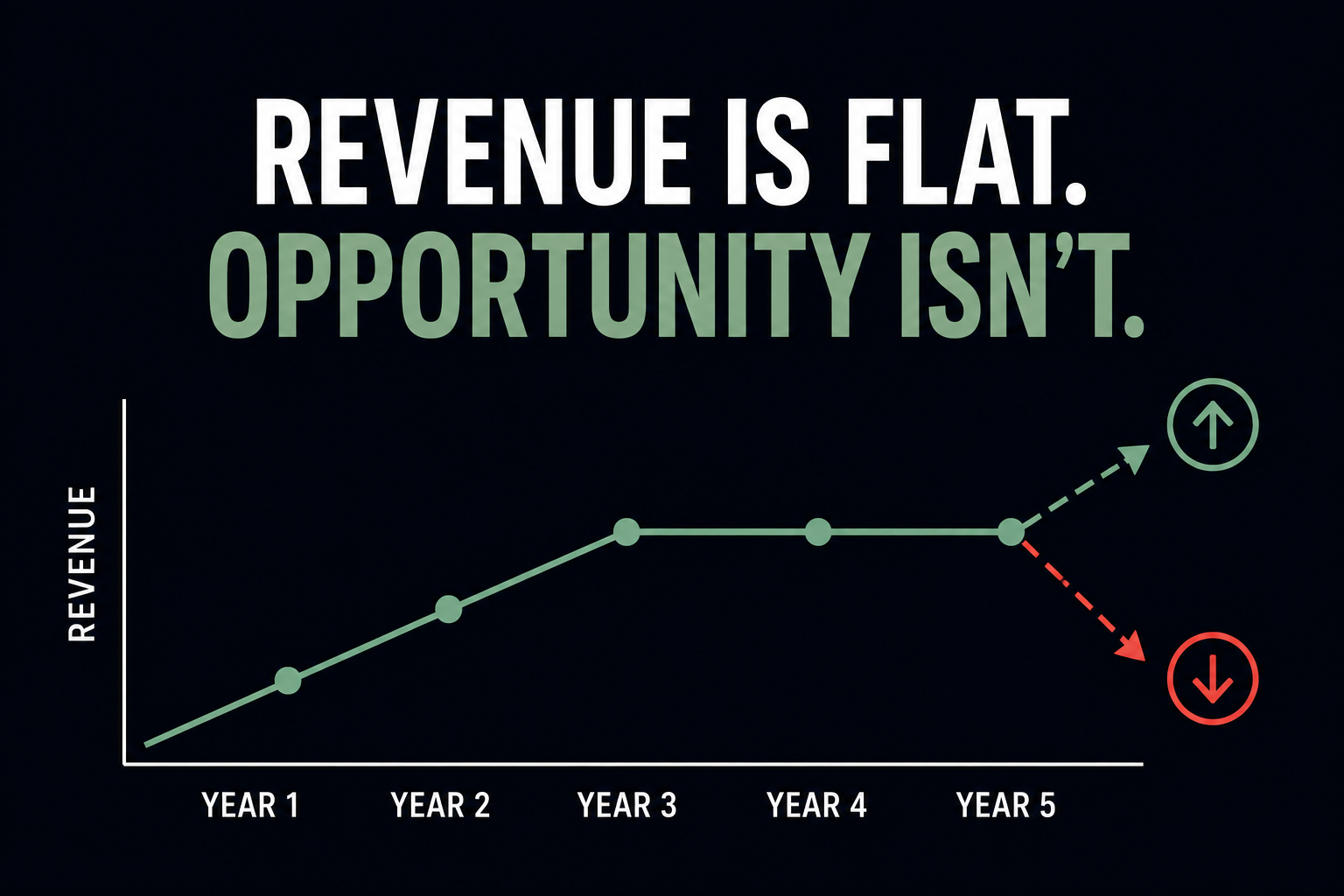
Growth creates confidence.
And confidence creates ambition.
A successful company begins looking beyond the market that made it successful and starts asking:
Where else could we win?
A new industry.
A new geography.
A new customer segment.
A new product category.
A new service offering.
For established companies, entering a new market can create an entirely new chapter of growth.
It can also become one of the most expensive distractions in the company.
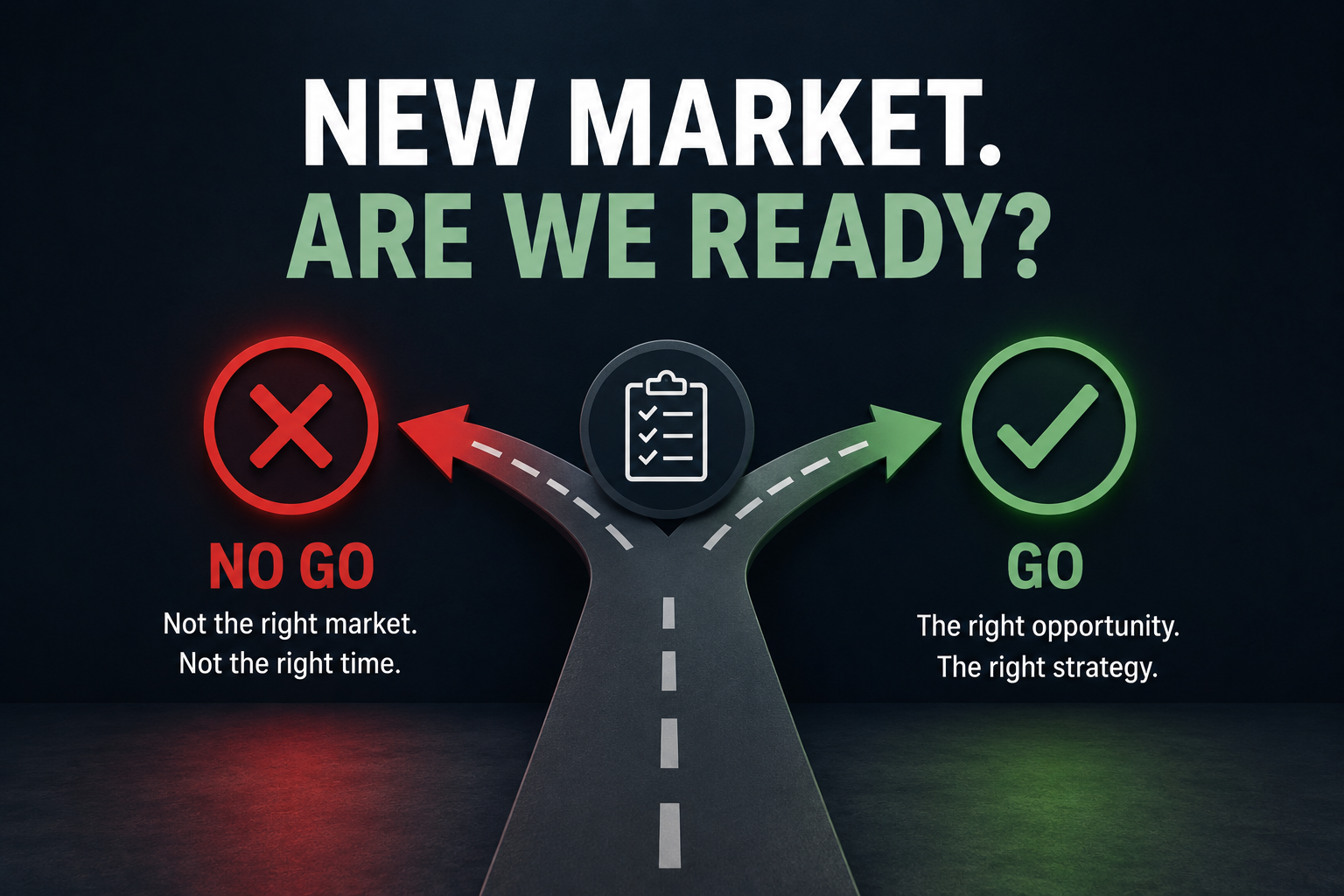
The problem isn’t usually whether the company can enter the market.
The problem is determining whether it should.
Before committing salespeople, marketing dollars, inventory, technology, leadership attention, or capital, I believe every executive team should be able to answer five questions.
1. Is There Really a Market?
Opportunity looks very different from the outside.
“We think there’s a market.”
“Our customers have asked about it.”
“Our competitors are doing it.”
“The market is worth $2 billion.”
None of those statements prove that your company has a viable opportunity.
Total market size is interesting.
Addressable opportunity is what matters.
Who specifically would buy from you?
How many of those buyers exist?
What are they buying today?
What problem are they trying to solve?
How much are they willing to pay?
How difficult are they to reach?
What would have to happen for them to switch?
Before asking how to market to a new audience, determine whether there is an audience worth pursuing.
Market enthusiasm should never replace market validation.
2. Why Would They Buy From You?
This may be the most important question in market expansion.
Your reputation in your current market doesn’t automatically transfer to the next one.
You may be extremely well known in manufacturing and completely unknown in healthcare.
You may dominate Michigan and have zero credibility in Texas.
You may be trusted for one service while buyers have never considered you for another.
The new customer doesn’t care that you’ve been successful somewhere else.
They want to know:
Why you?
What problem do you solve better?
What makes your approach different?
What proof can you provide?
Why should someone leave their current supplier?
If leadership cannot clearly articulate the answer, the company isn’t ready to scale its investment.
Entering a market without differentiation usually means competing on price.
3. Do We Actually Understand This Buyer?
One of the most dangerous assumptions in expansion is believing the new customer thinks like your existing customer.
They may not.
Different markets can have completely different:
-
Buying committees
-
Decision criteria
-
Sales cycles
-
Budget cycles
-
Regulatory concerns
-
Competitive dynamics
-
Language
-
Objections
-
Expectations
Even the person making the decision may change.
The message that resonates with a plant manager may mean nothing to a hospital executive.
The value proposition that works for an owner may fail with a procurement department.
Before building campaigns, build understanding.
Great marketing starts by understanding the customer—not by telling the customer about yourself.
4. Can Sales Actually Win There?
Marketing can create opportunity.
Sales still has to convert it.
Before entering a new market, marketing and sales need to agree on some very practical questions:
Who is the ideal customer?
Who is the decision-maker?
How will we reach them?
What will the sales process look like?
How long will it take?
What objections should we expect?
What tools does sales need?
What constitutes a qualified opportunity?
And perhaps most importantly:
What does success look like?
If marketing enters the market before sales is prepared to sell into it, you’re paying to create interest the organization may not be capable of converting.
That’s not growth.
That’s waste.
5. What Are We Willing to Invest—and When Do We Walk Away?
Every new market needs a hypothesis.
And every hypothesis needs a scoreboard.
Before entering the market, leadership should establish:
What are we investing?
What results do we expect?
What are the leading indicators?
What are the milestones?
How long are we willing to test?
What would cause us to invest more?
What would cause us to stop?
This matters because new initiatives quickly develop emotional ownership.
Someone championed the idea.
People were hired.
Money was spent.
Announcements were made.
And suddenly stopping feels like failure.
It isn’t.
Continuing to fund an opportunity the data doesn’t support is failure.
The goal isn’t to prove the original idea was right.
The goal is to determine whether the market deserves additional investment.
The Cost of Getting It Wrong
The obvious cost of a failed market expansion is money.
But that’s rarely the only cost.
There is also:
Opportunity cost.
Your best people spent six months pursuing the wrong market instead of strengthening the right one.
Leadership distraction.
Management attention moved away from the core business.
Brand risk.
The company entered a market without the credibility or positioning necessary to compete.
Sales fatigue.
Salespeople chased opportunities that were never realistically winnable.
Organizational confidence.
Employees become increasingly skeptical of the next “big growth initiative.”
That’s why entering a new market shouldn’t begin with:
“How are we going to market this?”
It should begin with:
“Should we be here at all?”
What a Fractional CMO Brings to the Table
A Fractional Chief Marketing Officer should not be the executive cheerleader for every new idea.
Sometimes the greatest value we bring is saying:
Not yet.
Or:
Not this market.
Or:
The opportunity is real, but our positioning is wrong.
Or:
Let’s prove this with $50,000 before committing $500,000.
An experienced Fractional CMO brings an objective commercial perspective to the executive table.
Before significant investment is made, we can help leadership:
Validate the opportunity. Determine whether meaningful demand actually exists.
Define the Ideal Client Profile. Identify exactly which companies and decision-makers represent the highest-value opportunity.
Understand the buyer. Determine what matters to them, how they buy, and what would cause them to change.
Analyze the competition. Understand who owns the market today and where opportunities for differentiation exist.
Build the positioning. Give the market a compelling reason to choose you.
Align sales and marketing. Ensure demand generation and sales execution are built around the same strategy.
Build the go-to-market plan. Define channels, investment, messaging, milestones, accountability, and measurement.
Establish the scoreboard. Know quickly whether the strategy deserves more investment—or needs to change.
Five Questions Every CEO Should Ask Before Saying “Go”
1. Can we prove this market has a problem we’re uniquely positioned to solve?
2. Who exactly is our ideal customer—and why would they choose us?
3. Do we understand how this buyer thinks, buys, and makes decisions?
4. Are sales and marketing prepared to win in this market?
5. What evidence will tell us to accelerate, adjust, or walk away?
If your leadership team can’t answer those questions clearly, you’re probably not ready to enter the market.
And that’s okay.
It’s considerably cheaper to discover that before you launch.
New Markets Should Create Growth—Not Distraction
Entering a new market can transform a company.
It can diversify revenue.
Reduce customer concentration.
Create new competitive advantages.
Increase enterprise value.
And open a runway for years of profitable growth.
But expansion should be the result of evidence and strategy—not enthusiasm and assumptions.
Wyckoff Consulting works with established companies generating $3 million to $50 million in annual revenue at critical business inflection points, including organizations preparing to enter new vertical markets, geographies, customer segments, and service categories.
As a Fractional Chief Marketing Officer, our job isn’t simply to help you launch.
Our first job is helping you determine whether you should launch at all.
And once the answer is yes?
We build the strategy to help you win.
— Luke Wyckoff
Founder, Wyckoff Consulting